
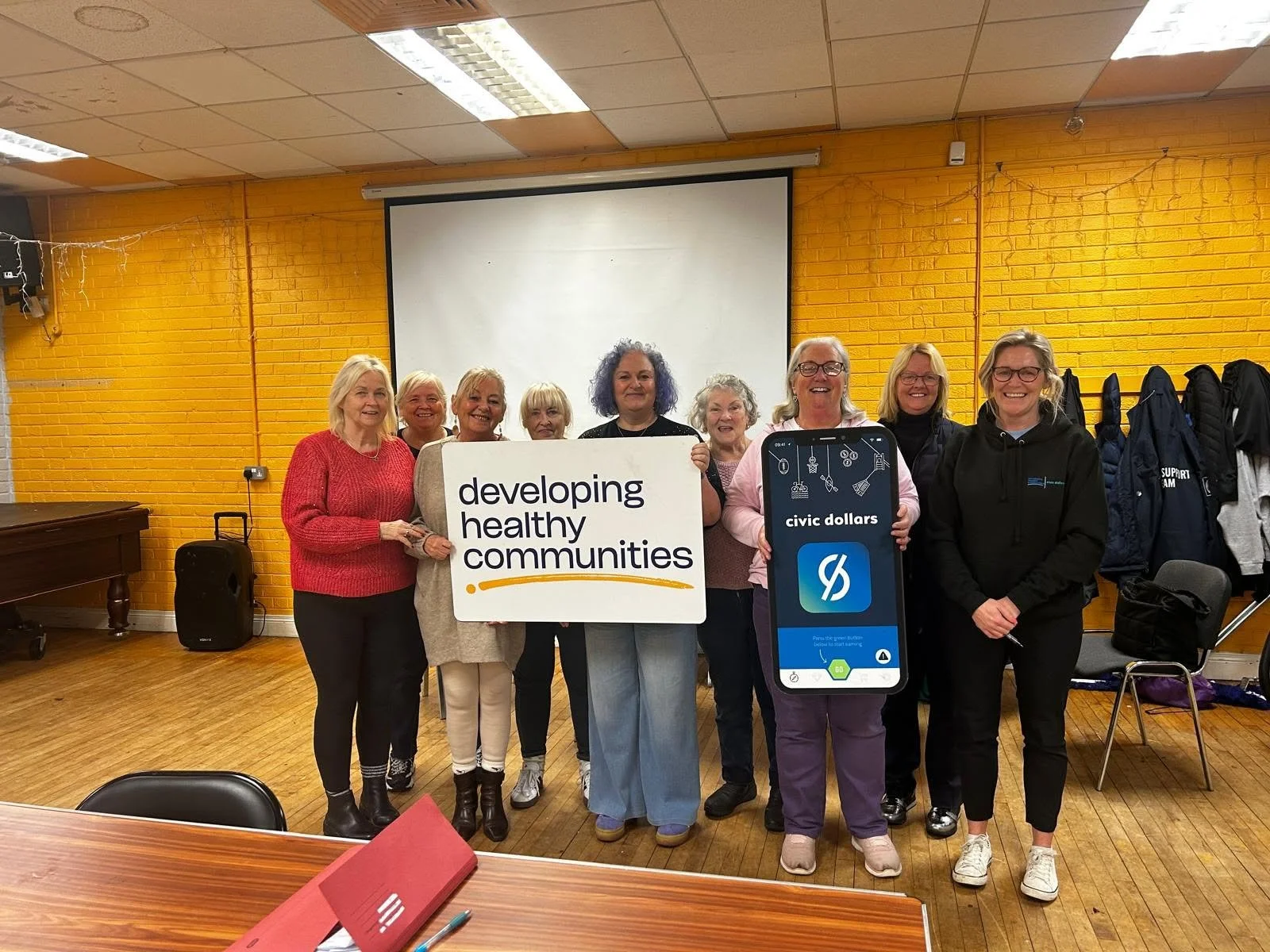
Participants of the Civic Dollars project along with our researcher Dr. Grainne McAnee and DHCNI Staff
Location: Derry City & Strabane, Northern Ireland
Partners: Digital Health & Care Northern Ireland (DHCNI)
Funding: Innovate UK
Focus: Diabetes prevention, physical activity, mental wellbeing, health literacy and community engagement
How Civic Dollars helped 481 people at risk of Type 2 diabetes spend over 27,000 hours outdoors, while supporting healthier habits, improved mental wellbeing and stronger community connections.
The Challenge
Preventing Type 2 diabetes requires more than encouraging people to exercise. Barriers such as low motivation, limited mobility, social isolation, poor sleep and a lack of confidence can make adopting healthier lifestyles difficult.
The challenge was to create an inclusive, community-based intervention that encouraged people at risk of Type 2 diabetes to spend more time outdoors, engage with local health and wellbeing services, and develop healthier everyday habits.
The Civic Dollars Solution
Working with DHCNI and local community partners, Civic Dollars delivered a digital health intervention that rewarded participants for spending time outdoors in designated parks, green spaces and public spaces across Derry City & Strabane.
Unlike traditional fitness apps, Civic Dollars rewards time spent outdoors rather than steps taken or distance travelled, making participation accessible to people with different physical abilities and fitness levels.
Participants earned Civic Dollars for every 30 minutes spent in designated outdoor Earn Zones. These could then be redeemed for practical rewards, wellbeing experiences and access to community-led activities.
Crucially, the project went beyond rewarding outdoor activity. It connected participants with local community organisations, health practitioners and wellbeing providers, creating opportunities to improve physical health, mental wellbeing and social connection.
Community-Led Rewards: More Than Just an Incentive
One of the most successful elements of the project was its integration of community and group-led rewards.
Participants could use their Civic Dollars to access activities and experiences supporting healthier lifestyles, including:
Holistic therapies and mindfulness: Sound baths, yoga, relaxation and creative mindfulness sessions supporting emotional wellbeing and stress management.
Sleep therapy: Practical education and support to help participants understand the importance of sleep and develop healthier sleeping habits.
Light exercise and accessible fitness: Gentle movement, armchair aerobics and inclusive activity sessions suitable for different abilities.
Health literacy and nutrition: Educational sessions exploring nutrition, emotional eating, healthy lifestyle choices and factors associated with Type 2 diabetes.
Practical everyday rewards: Popular monthly prize draws, including local butcher vouchers and electricity vouchers, providing tangible incentives relevant to participants' daily lives.
These community-led activities helped turn Civic Dollars from a digital reward system into a gateway to real-world wellbeing support, encouraging participants to try new experiences, connect with others and develop greater confidence.
The Impact: Independently Evaluated Outcomes
Independent research undertaken by Dr Gráinne McAnee highlighted substantial self-reported improvements across physical activity, mental wellbeing, social connection and healthier behaviours.
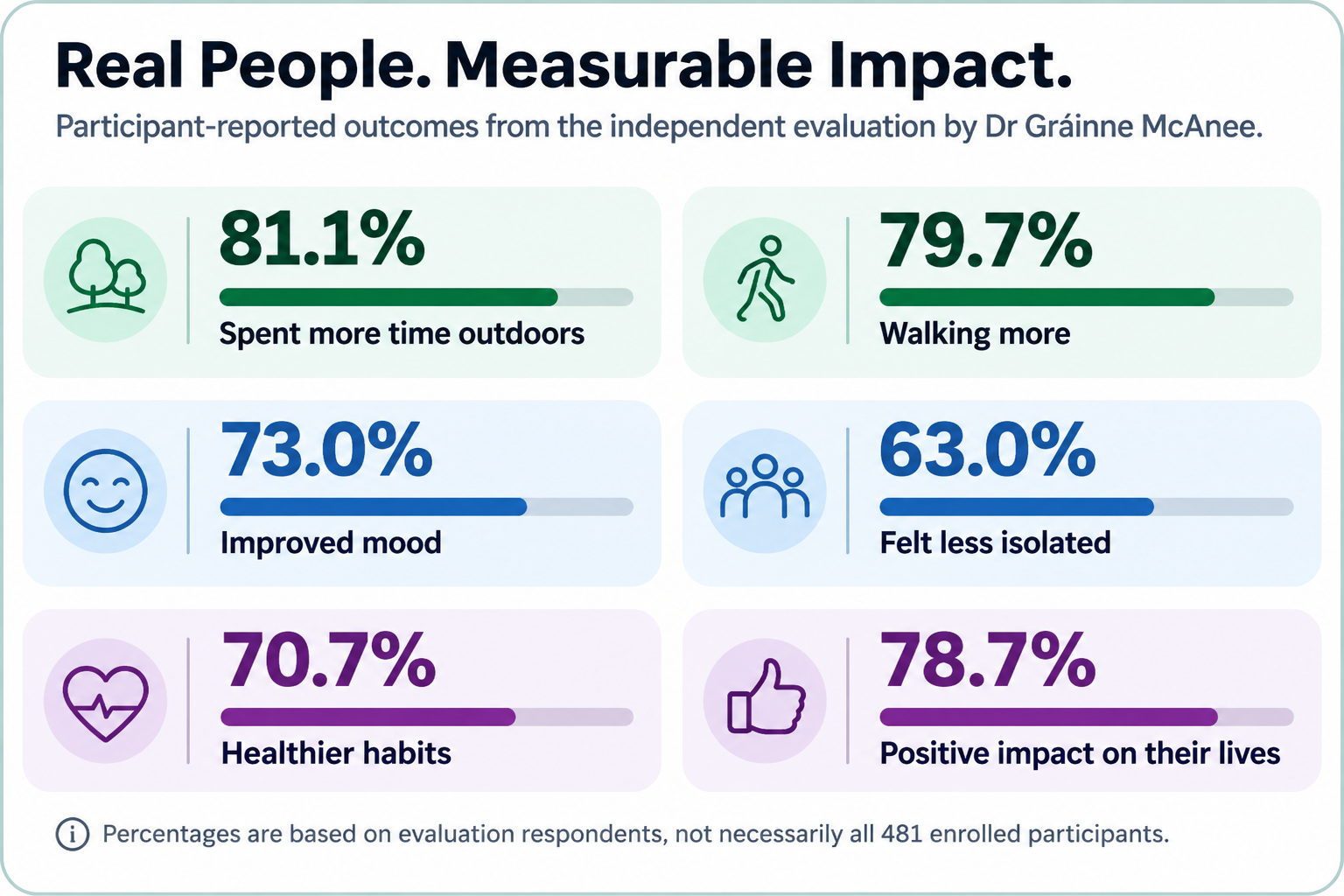
Project impact data
Increased Physical Activity
81.1% reported spending more time outdoors.
79.7% reported walking more than before.
64.4% reported improved stamina.
63.9% reported improved fitness.
Improved Mental Wellbeing and Social Connection
73.0% reported improved mood.
63.0% reported feeling less isolated.
62.5% reported greater confidence.
60.8% reported reduced stress.
Positive Lifestyle Changes
78.7% agreed Civic Dollars had a positive impact on their lives.
70.7% reported developing healthier habits.
These findings suggest that combining accessible outdoor activity with meaningful rewards and community-led wellbeing support can help people make positive changes across multiple aspects of their lives.
Participation at Scale
Alongside these reported outcomes, the programme recorded:
481 participants from the pre-diabetic community.
Over 27,000 hours spent outdoors in local parks and open spaces.
9,875 unique outdoor visits recorded by August 2026.
The combination of digital participation data and independently evaluated participant feedback provides evidence of both programme engagement and perceived benefits.
When the Community Became Part of the Intervention
One of the central lessons from the project was that digital technology alone is not the intervention.
Civic Dollars provided the motivation and incentive layer, but community organisations, wellbeing practitioners and local activity providers brought the programme to life.
By connecting outdoor activity with sleep education, holistic therapies, gentle exercise, nutrition and health literacy, the project created a more rounded approach to supporting people at risk of Type 2 diabetes.
The reported improvements in mood, confidence, stress and social isolation also demonstrate why preventative health initiatives should consider emotional and social wellbeing alongside physical activity.
A Scalable Model for Preventative Health
The Derry City & Strabane project provides a practical example of how local authorities, healthcare providers and public health organisations can use Civic Dollars to complement existing preventative health services.
The approach can be adapted for Type 2 diabetes prevention, weight management, healthy ageing, mental wellbeing, social prescribing and programmes addressing loneliness and social isolation.
With no additional physical infrastructure required, Civic Dollars can help organisations activate existing parks, green spaces, community groups and wellbeing services while measuring engagement and participant outcomes.
Turning Healthier Behaviour into Community Value
The success of this project wasn't simply the 27,000 hours spent outdoors. It was what those hours helped unlock.
More time outdoors. More walking. Improved mood. Greater confidence. Reduced isolation. Healthier habits.
By rewarding achievable actions and connecting people with community-based support, Civic Dollars demonstrated how a simple digital incentive can become part of a wider preventative health intervention.
Interested in bringing Civic Dollars to your community or public health programme?
Discover how Civic Dollars can help incentivise healthier behaviours, connect people with local services and measure meaningful community engagement.
Get in touch to explore a pilot or partnership.
Stephen McPeake - stephen@civicdollars.com
Read the independent evaluation: When the Community Became Part of the Intervention – DHCNI Project Report